Why Digital-First Brands are Betting Big on Offline Retail in the East
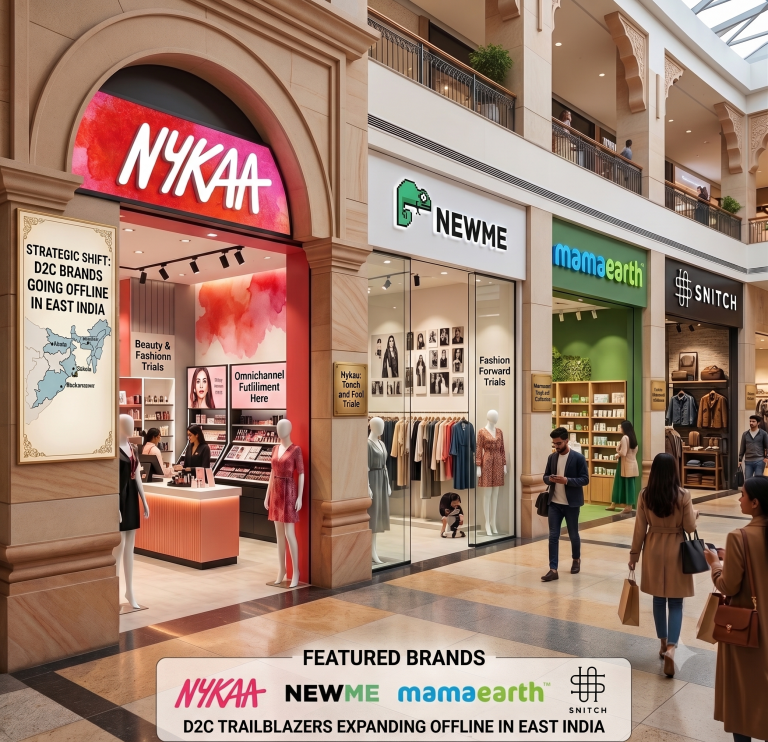
The pure-play e-commerce model that built India’s D2C wave is running into a cost problem. Digital customer acquisition costs have climbed steadily as platforms compete for the same paid-search and social media inventory, pushing brands to look for channels that acquire customers more efficiently and hold onto them longer. Physical stores have re-emerged as that channel, not as a retreat from digital but as an extension of it, built to convert online browsers into repeat, higher-value buyers. The pattern is visible across categories. Menswear brand Snitch, which started as an online-only label, opened its first Kolkata store on August 15, taking its national count to 127 outlets, and has flagged Bhubaneswar among the emerging markets it plans to enter next. Gen Z fashion-tech brand NEWME has pushed into the Northeast, opening stores in Shillong and Guwahati as it builds a presence in youth-focused markets beyond the metros, with both launches drawing high footfall and long queues before opening hours. Sugar Cosmetics entered Kolkata’s retail scene with a store at Forum Mall, while Nykaa and Mamaearth have followed similar standalone and shop-in-shop formats in other regional hubs. The common thread is that these are digital-native brands choosing physical retail as a deliberate second act, not a legacy channel they inherited.
East India’s appeal for this strategy is specific. Cities like Kolkata, Guwahati, Bhubaneswar, and Patna combine rising disposable incomes with a wave of new mall and organised retail space, giving brands real estate options that didn’t exist five years ago. Categories like beauty and fashion also carry a strong touch-and-feel bias in these markets, where consumers want to test shade ranges or fabric before committing, something no product page fully replicates.
Operationally, the store does more than sell. It functions as a trust signal that lowers return rates by letting shoppers verify fit and quality in person, and it gives the brand a physical anchor that reinforces recall built through digital marketing. Store footfall data also feeds back into inventory and city-level demand planning, sharpening how these brands allocate stock across both channels.
For traditional East Indian retailers and mall developers, the message is straightforward. D2C brands are no longer passive online competitors; they are now active bidders for the same high-street and mall space that legacy retailers depend on, often backed by venture funding and national brand recognition that lets them pay premium rents to secure visibility. Developers should expect these brands to become serious anchor-tenant candidates, and local retailers should treat their entry as a signal to sharpen their own in-store experience rather than compete on price alone.
[Disclaimer: The accompanying image is an AI-generated conceptual illustration created for independent editorial and analysis purposes. All corporate names and stylized storefront elements are properties of their respective brands]