Kolkata has always had a complicated, passionate relationship with clothing. In a city where a hand-embroidered Kantha stitch is as much a cultural statement as a garment, fashion is never merely functional. The City of Joy is home to a boutique culture that has thrived quietly — not in the blare of mall corridors or the noise of social media campaigns, but in the intimacy of curated stores, the honesty of handloom, and the wisdom of designers who understand that heritage is not a trend.
East India Retail takes a close look at some boutiques across Kolkata that have carved out a distinct identity in the city’s fashion landscape — each one championing craftsmanship, regional textile traditions, and an experience that mass retail simply cannot replicate.
1. Ethnic Boutique by Gargi — The Saree Connoisseur’s Destination
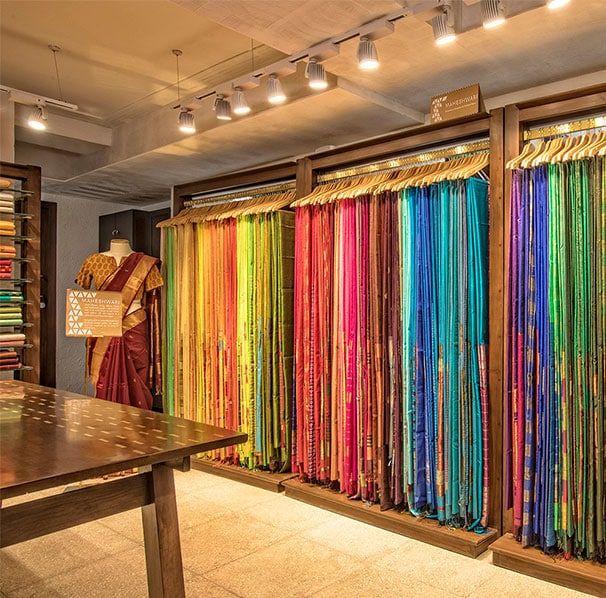
For the woman who approaches saree shopping with genuine knowledge and high expectations, Ethnic Boutique by Gargi offers something that casual fashion stores rarely can: an expertly curated collection of weaves from across India’s rich textile map.
Founded by Gargi, the boutique specialises in handloom and premium sarees — Kanjivaram (in tissue, brocade, silk, semi, and sico varieties), Banarasi (across crepe, kora, katan, mashru, khaddi, tussar, raw silk, tissue, and georgette), Gadwal, Tussar, and more. The Tussar range alone spans Kalamkari, Kantha, Leheriya, Parsi, Zardosi, and Gujarati hand-painted varieties, reflecting Gargi’s deliberate effort to celebrate regional craft traditions in their full diversity.
Beyond sarees, the boutique stocks dupattas, dress materials, salwar suits, lehengas, and accessories, with a pricing range designed to be accessible across occasions — from casual officewear to elaborate wedding looks. Ethnic Boutique by Gargi is also notably active, with regular exhibition-style pop-up events across Kolkata, North Bengal, Tripura, and even Guwahati, bringing its curated selection directly to communities beyond the city.
For retailers and industry observers, the boutique model here is instructive: deep, authentic specialisation in textiles — rather than stocking every trend — creates a loyal, knowledgeable customer base that returns season after season.
Known For: Kanjivaram, Banarasi, Gadwal, Tussar sarees; handloom fabrics; regional weave specialists; multi-city exhibitions
Website: ethnicboutique.in
2. Kunbi — A Living Archive of India’s Handloom Traditions
Nestled in the Gariahat neighbourhood, Kunbi has earned a reputation that goes well beyond conventional saree retail. It is, as its loyal customers often describe it, a world of merchandise gathered from nearly every textile-producing state in India — and the in-store experience reflects that ambition.
Kunbi began with sarees — classic Chanderi, Bengal handloom, Kantha stitch, Banarasi silk (in tussar and kora variants), Odisha weaves, linen, and digital linen. The boutique has since expanded its range to include designer blouses, kurtis, handloom dupattas, and even handicraft items and Darjeeling tea, making it a genuinely unusual lifestyle destination. Kunbi also stocks its own ‘Maya Premium Collection’ and a dedicated wedding range, reflecting its ambition to serve shoppers across all price points and occasions.
The boutique sources directly from artisans across India and takes a strong stance on sustainability — promoting handloom textiles and fair craft practices as core business values, not just marketing language. Customer reviews consistently highlight the warmth of the store’s atmosphere and the depth of knowledge its staff bring to styling conversations.
For fashion retail professionals, Kunbi offers a compelling case study: a boutique that achieved rapid growth by staying true to handloom authenticity while continuously expanding product categories in ways that felt natural and coherent, rather than opportunistic.
Known For: Handloom sarees from across India, Bengal Kantha, Bishnupuri silk, Shibori, Dhakai Jamdani, designer blouses, kurtis, handicrafts, direct artisan sourcing
Website: kunbi.co.in
Address: P-566, Keyatala Rd, Hindustan Park, Gariahat, Kolkata — 700029
3. Byloom — Handloom as a Living Tradition
Few boutiques in Kolkata carry as clear and committed a point of view as Byloom. Founded in 2002 by Rumi and Bappaditya Biswas — both trained in fashion and textiles — the brand began as Bai Lou, meaning the spirit of expression, before opening its physical store in 2011. What started as a deeply personal commitment to handwoven textiles has grown into one of the city’s most respected destinations for authentic Indian handloom.
Byloom’s founding philosophy is straightforward but increasingly rare: that handloom’s survival depends not on nostalgia but on adaptation. The Biswas couple travel extensively across India to document tribal weaving traditions and textile techniques — incorporating designs from communities as far afield as the Angami tribe of Nagaland into their collections. This dedication to research has given Byloom a distinctly unusual range: Jamdani and Abir sarees sit alongside Kantha stitch pieces, cotton and matka silk, Madhubani prints, and experimental fabric fusions that blend different fibres and yarns into entirely new textures.
The boutique’s commitment to the weaving community goes beyond sourcing. Byloom actively works to ensure weavers function as micro-entrepreneurs rather than wage earners — a model that has drawn international recognition. Byloom was awarded the UNESCO Seal of Excellence for Craft, a distinction that reflects both the quality of its products and the integrity of its supply chain.
Beyond sarees, Byloom’s range extends to women’s and men’s apparel, children’s wear, accessories, handicrafts, and home and living products — all anchored in handloom and natural Indian fabrics. The Hindustan Park store in Gariahat is a destination in itself, set in a quiet residential lane and celebrated for its warm, unhurried atmosphere. For retail professionals, Byloom is a compelling study in how craft-first values, genuine artisan relationships, and design intelligence can build a brand with lasting cultural authority.
Known For: Handwoven sarees, Jamdani, Kantha stitch, tribal-inspired weaves, natural fabrics, UNESCO Seal of Excellence, artisan-direct sourcing, home & living
Website: byloomonline.com
Store: 58B Hindustan Park, Gariahat, Kolkata — 700029
4. Indiloom — Where Digital Reach Meets Handloom Depth
In a city known for its love of the handwoven, Indiloom has found a distinctive lane: bringing Kolkata’s saree culture online without stripping it of its richness. Based in Kolkata, Indiloom operates as a digital-first boutique — one that takes the breadth of India’s regional textile traditions and makes them accessible to shoppers well beyond Bengal’s borders.
The range is genuinely impressive in its scope. Indiloom’s saree catalogue spans woven, printed, and embroidered categories — with embroidery styles including needle point, zari, and thread work. Its fabric library covers Georgette, Chinon, Crepe, Semi-Tussar, Kota Jamdani, Cotton, Organza, Linen, Kasavu, Chanderi, Kanjivaram, Tussar Silk, Banaras Silk, Khaddi Zari Silk, Mulberry Silk, Vidharbha, and more. The boutique also organises its collections by region — Bengal, Banaras, Rajasthan, Assam, Bhagalpuri, Madhya Pradesh — giving shoppers a structured way to explore India’s textile geography.
What distinguishes Indiloom within Kolkata’s boutique landscape is its occasion-first organisation: collections mapped to Makar Sankranti, Agomoni (the pre-Durga Puja season), cocktail evenings, formal office wear, and Republic Day reflect a sharp understanding of how Kolkata’s women actually plan their wardrobes around the city’s rich calendar of festivals and events.
For the retail industry, Indiloom illustrates an important evolution: a boutique-quality curation philosophy applied to an e-commerce model. It demonstrates that handloom retail and digital growth are not in tension — they can reinforce each other when the product knowledge and depth of range are genuinely there.
Known For: Woven, printed and embroidered sarees; pan-India regional weaves; occasion-specific collections; digital-first retail; Kanjivaram, Banarasi, Tussar, Kota Jamdani, Organza
Website: indiloom.com
Why Kolkata’s Boutique Culture Deserves Wider Industry Attention
What these boutiques share — despite their very different scales, locations, and specialisations — is a conviction that fashion built on craft and cultural identity is not just commercially viable, but increasingly sought after. As Indian consumers become more discerning and more aware of the value of handloom, regional weaves, and artisan-made clothing, Kolkata’s boutique culture is well-positioned to lead.
For the East India retail sector, these boutiques represent more than inspirational stories. They are evidence that a clear point of view — whether that is deep textile specialisation, artisan sourcing, lifestyle curation, or cultural performance wear — creates the kind of loyalty that transactional fashion retail struggles to build. In a market where fast fashion fatigue is real and growing, the boutique model built on craft and authenticity is not a niche anymore. It is a direction.