Banglanatak dot com brings artisans, designers, and thinkers together in a landmark craft celebration at Daga Nikunj, Kolkata
Banglanatak dot com is a social enterprise headquartered in Kolkata, working with a mission to foster inclusive and sustainable development using culture-based approaches. Recognised by UN Tourism and featured in the Harvard Business Review, this organisation has spent over two decades at the intersection of heritage, livelihoods, and human dignity. This April, it brought that work home — to the elegant halls of Daga Nikunj, Alka Jalan Foundation, Ballygunge — through Daksha: Crafting Voices 2026, a three-day craft bazaar held from April 3rd to 5th.
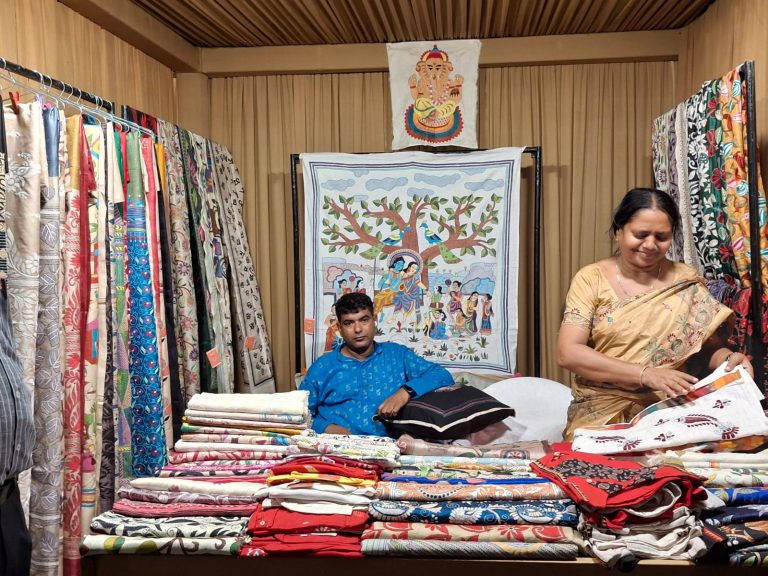
The event was not a mere exhibition. It was an ecosystem — featuring live craft demonstrations by artisans themselves, B2B networking sessions, illuminating talks, and vibrant cultural performances. Crafts from Odisha, Jharkhand, and West Bengal filled the space: Kotpad textiles, Sabai and Kashi grass, Dokra metal craft, Terracotta, Seraikela Chhau masks, Dhokra backstrap weaves, Kantha, Patachitra, and Wooden masks — each piece carrying the ecological wisdom and cultural identity of the hands that made it, curated with a contemporary lens by scenographer Swarup Dutta.
April 3 — Inaugurating with Ideas
The inaugural evening set the tone decisively. At 6 pm, the Craft Talk “Craft and Innovation: Tradition in Transition” brought together two formidable voices — Anuradha Kumra, Chief Advisor for Retail Partnerships at The Kunj (Ministry of Textiles, Government of India) and former President at Fabindia, and Jay Thakkar, Senior Associate Professor and Head of Exhibitions at CEPT University.
The conversation ranged from modernism in art to the practical pathways of integrating sustainable craft into everyday life. Thakkar grounded the discussion in personal example, sharing how he has switched to cast iron and terracotta cookware in his own home — reflecting that he doesn’t merely speak about sustainability, he lives it. He also made a compelling case for celebrating not just artisans but the mediums and ecosystems that make their work possible. A standout moment came when he argued that embedding art in school curricula could cultivate an entire generation that carries this journey forward. The session closed with an animated Q&A touching on brand-building within the craft ecosystem, policy-level support, and engaging young people in sustainable art. Earlier in the evening, the book Koraput Katha was also launched at 5 pm — a tribute to the indigenous tribes and landscape of Koraput, Odisha.
April 4 — Collaboration as Creative Practice
If the first day asked what craft could become, the second asked who gets to shape that transformation. The Craft Talk “Craft and Collaboration: Creating Together, Growing Together” tackled the central question head-on: what does co-creation between artisans and designers actually look like?
Swarup Dutta, the exhibition’s own curator and scenographer, argued for an ethos of “Design With, Not For” — insisting that meaningful design intervention must emerge from an ongoing dialogue with artists and their lived experiences, not be imposed upon them. Partha Dasgupta, contemporary artist and ceramicist, expanded this further, underscoring how craft can become a site for collective inspiration and social mobility — not just aesthetic output but a vehicle for communities to reimagine their place in the world. Ishan Pattanaik, designer and founder of KARU India, brought a market-facing lens to the conversation, focusing on how ancient craft traditions can be situated within modern décor and contemporary luxury — making heritage both aspirational and accessible.
Together, these perspectives opened up new horizons for what collaboration can mean: not a transaction between tradition and trend, but a genuine, evolving partnership. The evening’s performance added a fitting exclamation mark — Mayurbhanj Chhau, the vigorous maskless martial dance performed by Dibar Naik and group, was a reminder that living traditions carry their own powerful voice.
April 5 — A Celebration of Living Traditions
The final day was anchored by a rare performance of Chadar Badar, the traditional Santhal puppetry form performed by Som Saren and group — animated wooden figures narrating myths and everyday life through rhythmic music. Across all three days, the soulful strains of Baul music filled the evenings at 4 pm, performed by Bama Prasad Singha, Girish Khyapa, and Khokan Das — a reminder of Bengal’s deep spiritual and humanist folk roots.
Daksha 2026 was, at its heart, proof that craft is not nostalgia — it is a living, evolving language. And Banglanatak dot com continues to ensure that language is heard, valued, and passed on.
For more information: www.banglanatak.com | banglanatak@gmail.com | 8420106396